
Home / Babyproofing / Babyproofing Basics
Babyproofing Basics
Babyproofing means adjusting your home so a mobile baby or toddler can explore it with less risk of injury. It usually combines physical barriers, like gates and outlet covers, with changes in habits, like storing chemicals out of reach and keeping an eye on trip hazards. This guide covers what babyproofing involves, when to start, and the areas that matter most.
- KEY TAKEAWAYS
Start before your baby is mobile, not after. Focus first on falls (stairs, furniture tip-overs), water, choking hazards, and access to chemicals or medications — these cover most common home injury risks for babies and toddlers. Babyproofing is ongoing: revisit it as your child starts crawling, walking, and climbing.
What Is Babyproofing?
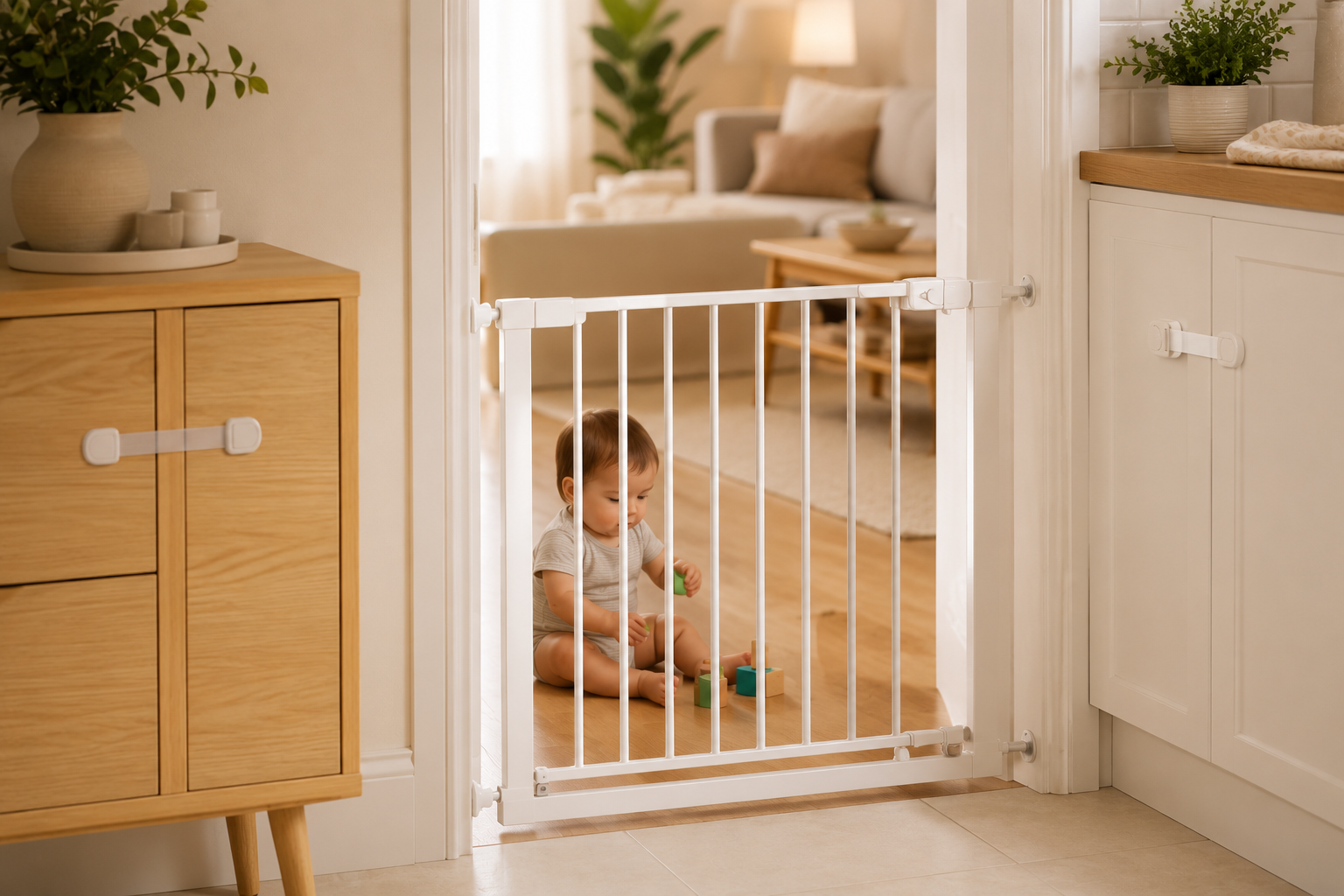
Babyproofing (also called childproofing) is the process of identifying hazards in your home from a young child’s perspective and reducing them. The U.S. Consumer Product Safety Commission’s childproofing guidance recommends layers such as safety gates at stairs, anchoring heavy furniture and TVs, outlet protection, cabinet and drawer locks, and keeping cords and hazardous substances out of reach. It also includes habit changes, such as never leaving a baby unattended near water, even briefly.
When Should You Start?
Most safety organizations recommend babyproofing before your baby becomes mobile, since crawling can begin as early as 6 months and sometimes sooner. Starting early gives you time to address hazards room by room without rushing, and it means your home is already safer once your baby starts exploring independently. If your baby is already mobile, it’s not too late — prioritize the highest-risk areas first: stairs, the kitchen, and anywhere heavy furniture could tip over.
Room-by-Room Overview
A full babyproofing pass usually covers these areas. Each is worth its own closer look, which is why this guide links out to more detailed room- and topic-specific guides below.
- Stairs and doorways — gates at the top and bottom of stairs, and at rooms with hazards.
- Living areas — anchor bookcases and TVs, pad sharp furniture corners, manage cords and blinds.
- Kitchen — lock cabinets with cleaning supplies, use back burners, keep knives and small appliances out of reach.
- Bathroom — lock medicine cabinets, store medications up high, never leave a baby alone near water.
- Nursery and bedrooms — secure dressers and shelving, keep cribs free of loose bedding and cords.
- Outlets and cords — cover unused outlets, secure or hide cords for blinds, lamps, and electronics.
Common Mistakes to Avoid
A few gaps show up often even in otherwise careful homes: relying on a baby gate that isn’t rated for the top of stairs, leaving a phone charger cord within reach of a crib or changing table, assuming a cabinet lock is baby-proof without testing it yourself, and treating babyproofing as a one-time task rather than something to revisit as your child grows taller, more mobile, and more curious.
- SAFETY TIP
Get down to your baby’s eye level and crawl through each room. What looks safe from adult height often reveals cords, small objects, or sharp corners once you see the room the way your baby will.
Next Steps
Once you’ve covered the basics here, the guides below go deeper on specific rooms and provide a printable checklist to track your progress.