
Home / Car & Travel / Infant Car Seat Safety
Infant Car Seat Safety
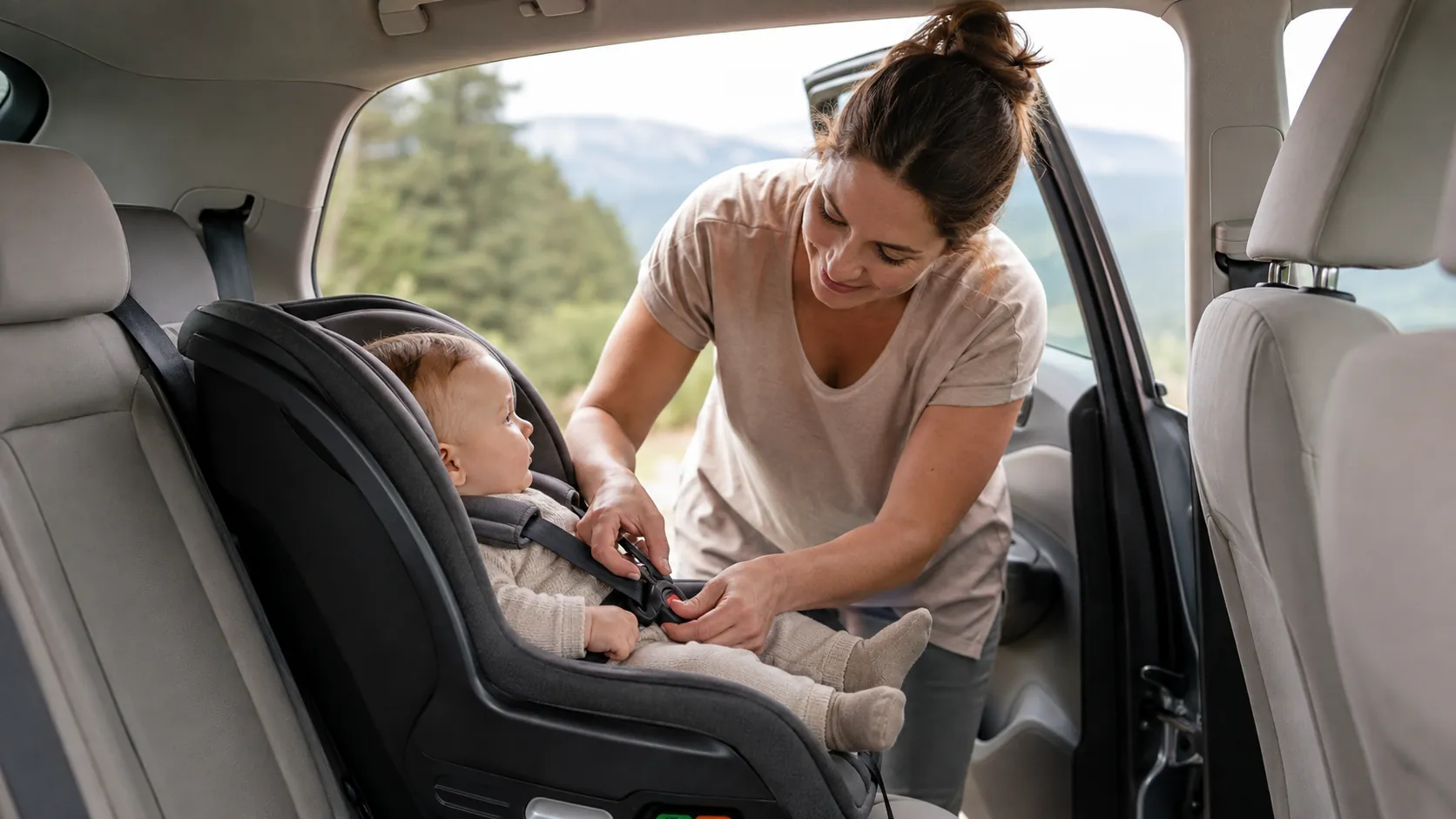
Beyond installation and rear-facing basics, a few everyday habits around your infant’s car seat matter just as much: how you buy one, how you use it outside the car, and what you never leave your baby in it for. This guide covers those broader safety habits.
- KEY TAKEAWAYS
Never leave a child alone in or around a vehicle, even for a minute — heatstroke can set in within minutes, and a child’s body heats up three to five times faster than an adult’s. A car seat is for travel only, not sleep or routine carrying — move your baby to a flat surface once you’re out of the car. Only use a seat with a known, crash-free history, check its expiration date, and skip any add-on product that isn’t specifically approved by the seat’s manufacturer.
Never Leave Your Baby Alone in or Near a Car
The National Highway Traffic Safety Administration warns that a child’s body temperature rises three to five times faster than an adult’s, and heatstroke can begin at around 104°F core body temperature. In 2025, 31 children died of vehicular heatstroke in the U.S.; the years 2018 and 2019 saw the highest counts in at least 25 years, at 53 children each year. More than half of these deaths happen because a caregiver forgot a sleeping child was in the back seat.
The American Academy of Pediatrics is direct on this point: never leave your child alone in or around cars, and lock your vehicle when it isn’t in use — NHTSA notes that over 230 children have died after climbing into an unlocked, unattended vehicle on their own. Rolling the windows down or parking in shade doesn’t meaningfully change how fast a car’s interior heats up.
Car Seats Are for Travel, Not Storage or Sleep
The American Academy of Pediatrics is specific that a rear-facing car seat should be used only for a child’s travel, not sleeping, feeding, or any other use outside the vehicle. When a young infant sleeps buckled into a semi-upright seat for an extended period, their chin can drop toward their chest and partially restrict their airway — a risk that doesn’t apply the same way once your baby is out of the seat and on a flat surface.
In practice, that means moving your baby to a crib, bassinet, or flat mat for naps once you’re home, rather than letting them nap for hours in a carrier-style seat, and keeping an eye on your baby any time they’re buckled into a seat outside the car, such as when it’s clicked into a stroller frame.
Buying and Reusing a Car Seat Safely
The AAP advises against using a secondhand car seat if you don’t know its full history, and never using a seat that’s been in a moderate or severe crash, even if it looks undamaged from the outside — the internal materials that absorb crash force can be compromised in ways you can’t see. Every seat also has an expiration date: check the manufacture date on the seat’s label, then contact the manufacturer to confirm how long they recommend using that specific model, or call NHTSA’s Vehicle Safety Hotline at 888-327-4236. Registering your seat with the manufacturer means you’ll be contacted directly if it’s ever recalled.
Skip Aftermarket Add-Ons
The AAP recommends against using extra products — strap covers, extra padding, mirrors, seat protectors, and similar add-ons — unless they came with the seat or are specifically approved by that seat’s manufacturer. These aftermarket products generally aren’t covered by any federal safety standard and haven’t been crash-tested with your exact seat, so there’s no way to know how they’ll behave in a crash.
- DOUBLE-CHECK BEFORE YOU LOCK THE CAR
Make it a habit to check your entire vehicle, especially the back seat, every time you park. Keep a visual reminder in the back seat — your phone, purse, or work badge — so you have to open that door before you walk away. Ask your childcare provider to call if your baby doesn’t arrive as expected. And always keep your car locked when it’s parked, so a curious child can’t climb in on their own.
Sources
This guide is based on published guidance from the National Highway Traffic Safety Administration on car seats and booster seats and the American Academy of Pediatrics via HealthyChildren.org. It is provided for general education and does not replace your specific car seat’s manufacturer instructions.