
Home / Babyproofing / Stove Knob Covers & Kitchen Safety
Stove Knob Covers & Kitchen Safety
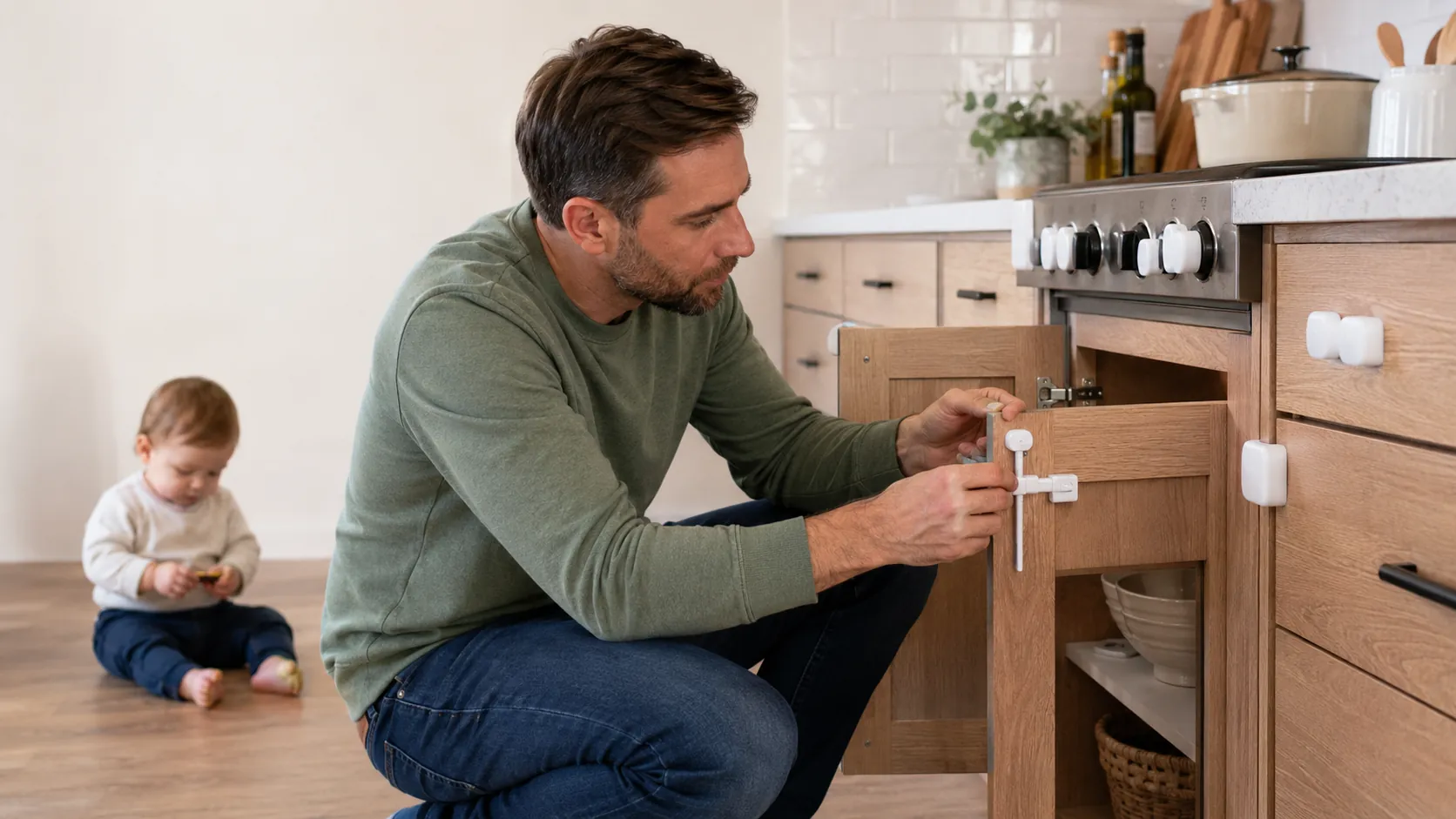
A curious toddler and a stove within reach is a real burn risk. Here’s what stove knob covers actually do, what to look for before buying one, and where they fit into a safer kitchen overall.
- KEY TAKEAWAYS
Stove knob covers reduce the chance of a child bumping or turning a burner on, but testing organizations have found they aren’t guaranteed to stop every determined child. Check that a cover actually fits your knob shape and size before buying, and treat it as one layer of kitchen safety, not the whole plan.
Affiliate Disclosure: SafeBabyGear may earn a commission from qualifying purchases made through links on this page, at no additional cost to you. This guide does not currently link to specific products — it focuses on what to look for before you buy, not which brand to choose.
What to Look For
Knob Shape & Size Fit
Covers need to actually match your knob’s shape and diameter. Measure your knobs before buying, since gas and electric ranges use different knob styles and sizes vary across brands.
Adult Usability
A cover that’s hard for you to remove one-handed while cooking will get skipped over time. Look for a design you’ll actually keep using every day, not just the first week.
Heat-Safe Material
Covers sit close to a heat source, so material that tolerates heat without warping or discoloring matters, especially on gas ranges where knobs are nearer the flame.
Cleanability
Covers near the stove collect grease and food splatter. Removable, wipeable, or dishwasher-safe designs are easier to keep clean and are less likely to get left off after cleaning.
What Stove Knob Covers Are For — and Where They Fall Short
Stove knob covers are physical barriers that fit over a stove’s control knobs to make it harder for a child to bump or turn them. Independent product testing has found real variation in how well different covers actually resist a child’s grip — some are effective, but testing organizations report that most tested covers didn’t reliably stop a curious child from operating the knob underneath. They work best as one layer of protection, not a guarantee.
- COVERS AREN'T A GUARANTEE
Every child’s grip strength and persistence is different. Treat a stove knob cover as a helpful barrier, not a reason to leave a child unsupervised near an active stove.
Common Cover Types
| Type | Best For | Trade-off |
|---|---|---|
| Clear box covers | Knobs with irregular or protruding shapes | Bulkier, can make knobs harder to read at a glance |
| Knob-shaped snap covers | Standard round knobs on many electric ranges | Fit is brand- and model-specific; measure first |
| Universal adjustable covers | Households unsure of exact knob dimensions | Looser fit than a dedicated shape match |
Kitchen Safety Beyond the Knobs
Knob covers address one hazard, but a few other steps make the kitchen meaningfully safer. Turn pot and pan handles inward and toward the back of the stove so they can’t be grabbed from below. For free-standing ranges, the CPSC recommends installing an anti-tip bracket, since these ranges can tip forward if a child climbs on an open oven door, which can cause serious crushing or scalding injuries. And keep a consistent “kid-free zone” immediately around the stove whenever it’s in use.
- NEVER RELY ON A KNOB COVER ALONE
A knob cover is not a substitute for supervision, and a loose-fitting or damaged cover that a child can pull free can itself become a small-parts hazard. Check covers periodically and replace any that no longer fit snugly.
Sources
This guide is based on published guidance from the U.S. Consumer Product Safety Commission (“Childproofing Your Home,” including its anti-tip bracket recommendation for free-standing ranges) and independent product-testing coverage of stove knob cover effectiveness from Consumer Reports. It’s provided for general education and doesn’t recommend specific brands or products.